Anxiety-Driven Ergonomics: How Economic Uncertainty Cycles Drive — and Destroy — Home Office Spending
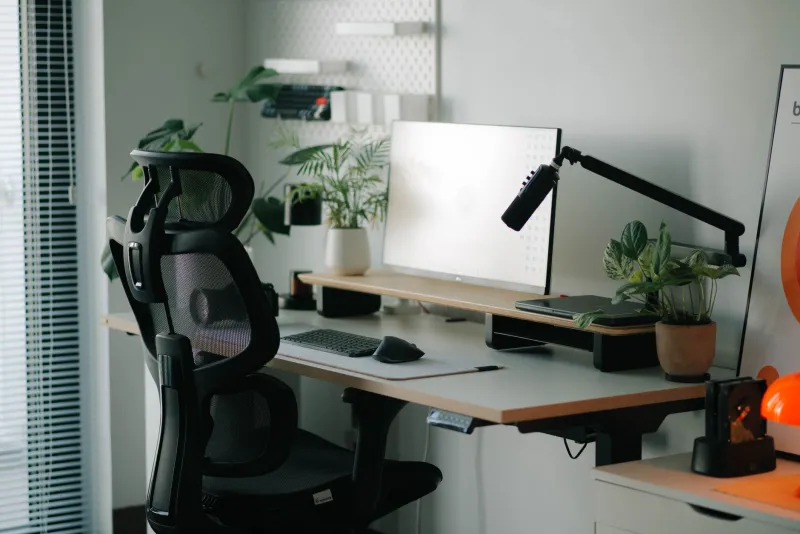
When economists and workplace analysts examine home office equipment spending in the United States, they tend to frame the data through a productivity lens — interpreting purchase volume for standing desks, ergonomic chairs, and dual-monitor setups as evidence of a workforce investing in its own efficiency. The spending cycle data, however, suggests a different primary driver: not productivity optimization, but anxiety management.
A systematic review of consumer transaction records and workplace sentiment survey data reveals a consistent and repeatable pattern. Home office investment surges during periods of economic uncertainty, intensified return-to-office debates, and widely reported recession signals — then contracts sharply once labor market conditions stabilize or workplace policy ambiguity resolves. The implication is significant: a meaningful portion of what the home office equipment industry classifies as productivity investment may be better understood as anxiety-driven spending, with all the volatility and reversibility that characterizes that category of consumer behavior.
Mapping the Spending Spikes
Transaction data from consumer spending panels allows for a granular reconstruction of home office equipment purchasing patterns over the past several years. The timeline is instructive. The initial surge in 2020 is well-documented and needs little elaboration — a workforce abruptly relocated to home environments had genuine, immediate equipment needs. What is more analytically interesting is the spending behavior that followed.
A secondary spike in home office equipment purchases emerged in the third quarter of 2022, coinciding with a period of intensive recession forecasting, technology sector layoff announcements, and renewed debate among major employers about hybrid and remote work policy. This surge occurred not because workers were newly remote — most had already established home office configurations by this point — but because economic anxiety created a renewed impulse to invest in the home workspace as a form of career security signaling and psychological control.
Spending in the category then declined sharply in early 2023 as labor market data stabilized and several high-profile return-to-office mandates were announced and implemented. A third, smaller spike appeared in late 2023 as a new wave of layoff announcements in the technology and financial services sectors generated fresh economic anxiety, before again contracting in early 2024.
The pattern — spike during uncertainty, contraction upon resolution — repeats with sufficient consistency to constitute a structural feature of the home office spending category rather than a series of independent market events.
The Psychology of the Productive Workspace
Understanding why economic anxiety drives home office investment requires examining the psychological function the workspace investment serves. AP Ipsos Results survey data collected during periods of elevated economic concern consistently shows that workers who feel insecure about their employment status are significantly more likely to report plans to upgrade their home office setup than workers who feel secure — even when controlling for actual remote work frequency.
This finding points to a mechanism that operates independently of practical need. The act of investing in a home workspace functions, for many workers, as a form of self-efficacy behavior: a tangible action taken in response to circumstances that feel otherwise uncontrollable. Purchasing an ergonomic chair or a premium video conferencing camera is a concrete step toward readiness — readiness for sustained remote work, readiness for a job search conducted from home, readiness for an uncertain future whose precise shape is unclear.
Behavioral economists would recognize this pattern as anxiety-driven preparedness spending, a category that also includes emergency supply purchases during geopolitical uncertainty and health product acquisitions during pandemic scares. The common thread is not rational need assessment but emotional state management through consumption.
What Employers Are Misreading
The anxiety-driven nature of home office spending cycles has direct implications for how organizations interpret and respond to employee equipment requests and wellness program data. Many HR and workplace operations teams have interpreted the recurring demand for home office stipends and ergonomic equipment allowances as evidence of sustained remote work productivity needs — a reasonable inference, but one that the spending cycle data complicates.
If a significant portion of home office equipment demand is cyclically driven by economic anxiety rather than ongoing productivity requirements, then employer stipend programs calibrated to anxiety peaks will systematically overprovide during uncertainty periods and face underutilization as conditions stabilize. AP Ipsos Results survey data supports this interpretation: among employees who received employer home office stipends during 2022 and 2023, utilization rates for approved equipment categories declined by an average of 34 percent in the six months following the initial disbursement — a pattern more consistent with anxiety-driven acquisition than with genuine ergonomic need.
This does not mean home office investment lacks legitimate productivity value. For workers who are genuinely and consistently remote, ergonomic equipment and quality productivity software represent meaningful quality-of-life and performance improvements. The issue is the conflation of this durable need with the cyclical anxiety-driven demand that inflates purchasing figures during uncertainty windows.
Productivity Software Follows the Same Pattern
The anxiety-driven spending cycle is not limited to physical equipment. Subscription data for productivity software — project management platforms, focus-enhancement applications, time-tracking tools, and digital organization systems — mirrors the hardware spending pattern with notable fidelity.
New subscription initiations for productivity software categories spike during the same economic uncertainty windows that drive ergonomic furniture purchases. Cancellation rates for these subscriptions accelerate once economic anxiety recedes, producing churn patterns that productivity software companies have struggled to explain through standard product lifecycle models. The explanation, when behavioral data is incorporated, becomes considerably clearer: these subscriptions were purchased as anxiety responses, not as considered productivity investments, and they do not survive the resolution of the anxiety that prompted them.
For software vendors marketing to the remote and hybrid workforce, this behavioral dynamic has meaningful implications for customer acquisition strategy. Campaigns timed to economic uncertainty windows will generate higher conversion rates but lower long-term retention. The acquired customer base is disproportionately composed of anxiety-driven purchasers whose subscription tenure is structurally shorter than that of customers acquired during stable periods.
Separating Signal From Noise in Workplace Investment Data
For organizations making capital allocation decisions about employee wellness and remote work infrastructure, the core methodological challenge is distinguishing genuine, sustained productivity need from the cyclical anxiety signal embedded in aggregate spending data. The two are not always separable from transaction volume alone — both drive purchases, and both register as demand in market-level data.
The most reliable separation methodology involves layering behavioral survey data onto transaction records — specifically, surveying purchasers about the primary motivation for their acquisition and tracking subsequent usage intensity over a six-month period. Purchases made during high-anxiety periods with usage patterns that decline sharply after 60 to 90 days are characteristic of anxiety-driven spending. Purchases made independent of anxiety peaks with sustained usage patterns are characteristic of genuine productivity investment.
Until that separation is made systematically, aggregate home office spending data will continue to overstate the depth of American workers' commitment to remote work infrastructure — and the strategies built upon it will continue to be surprised when demand evaporates as predictably as it arrived.